E.C.H.O. Project Launches in Vienna to Amplify Youth Voices Across Europe

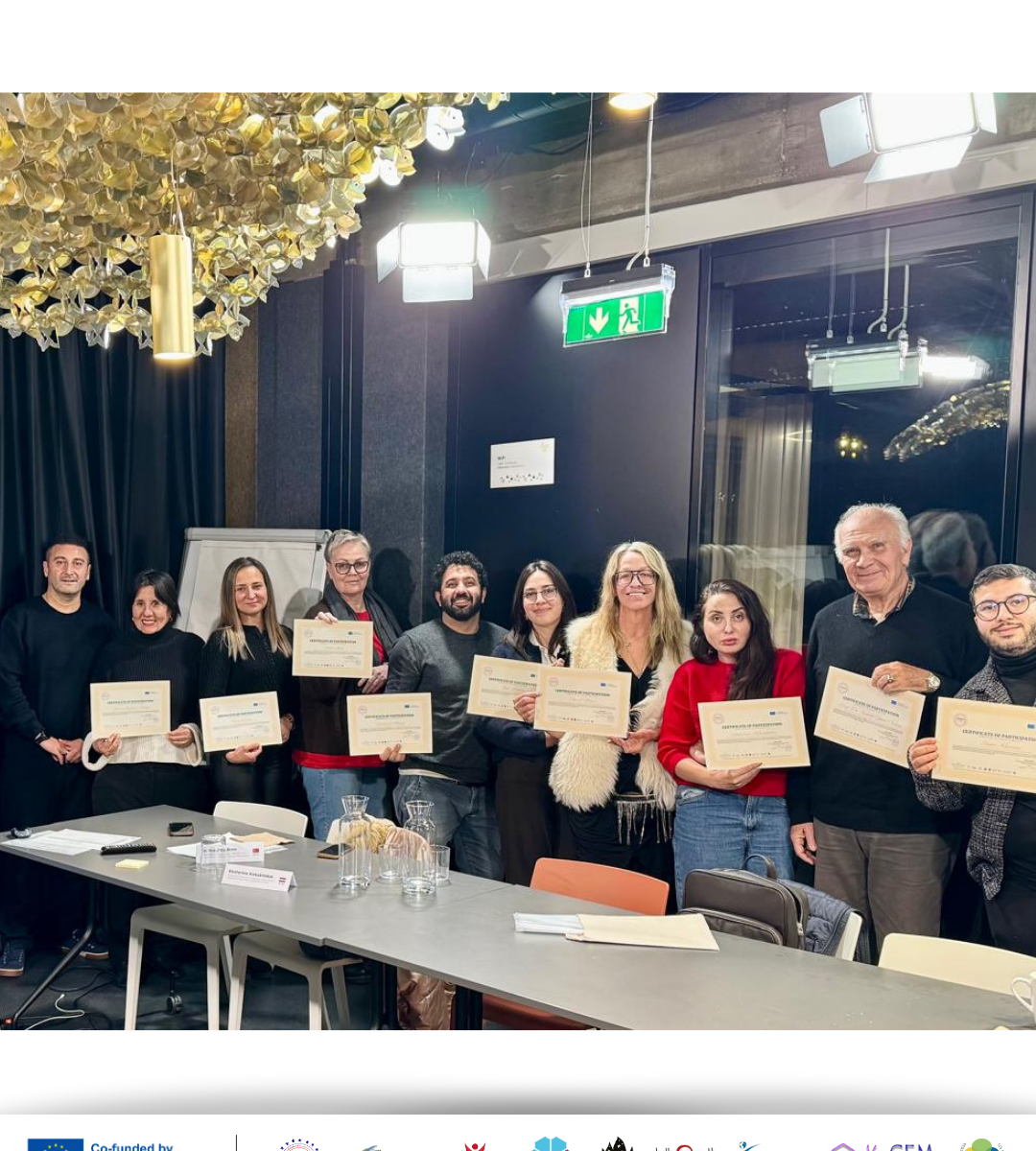
On 6 December 2025 in Vienna, Cheryl Miller, DLI Director, joined the kickoff meeting of E.C.H.O. (Amplifying Youth Voices for a Stronger Europe), an Erasmus+ youth cooperation project implemented by a consortium of nine experienced youth organisations from nine European countries. Coordinated by VABCKJS-EU (Austria) as Lead Partner, the project brings together COOLIVING (France), Casa Eslava (Spain), IVAIGO (Lithuania), Hello Youth (Sweden), ECCO (Norway), Digital Leadership Institute (Belgium), San Giuseppe Onlus (Italy), and K-GEM (Turkey). Together, the partnership combines complementary expertise in youth participation, civic engagement, inclusion, digital learning, and policy dialogue.
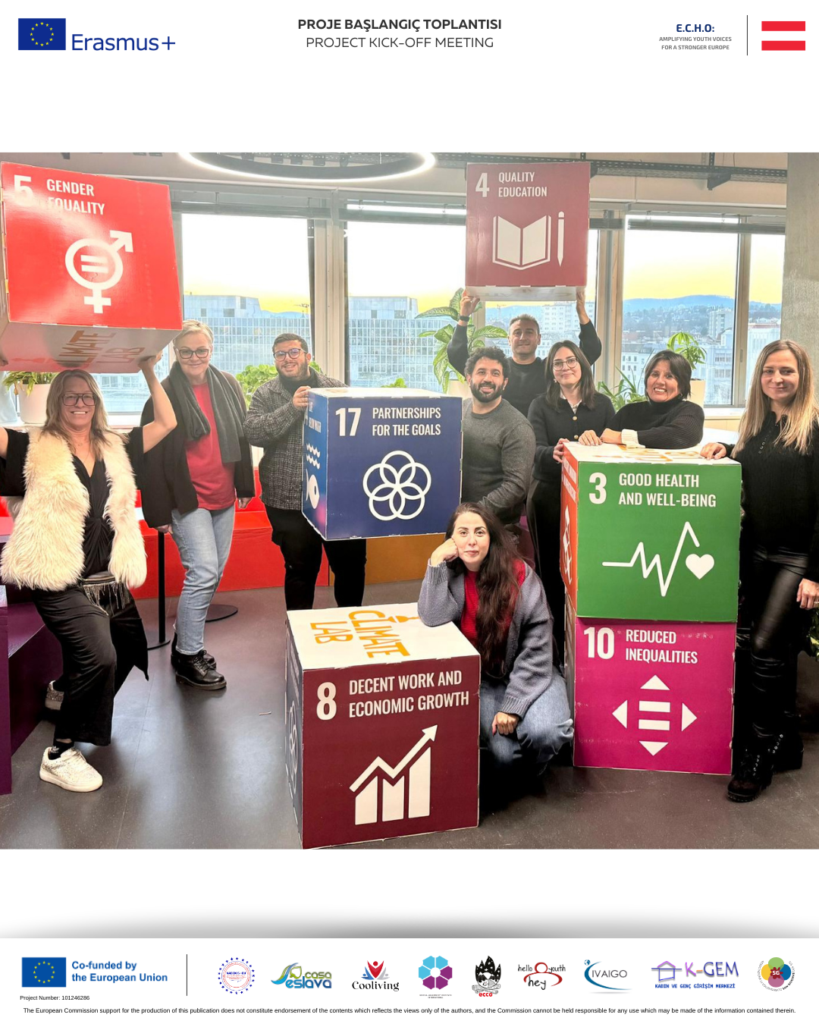
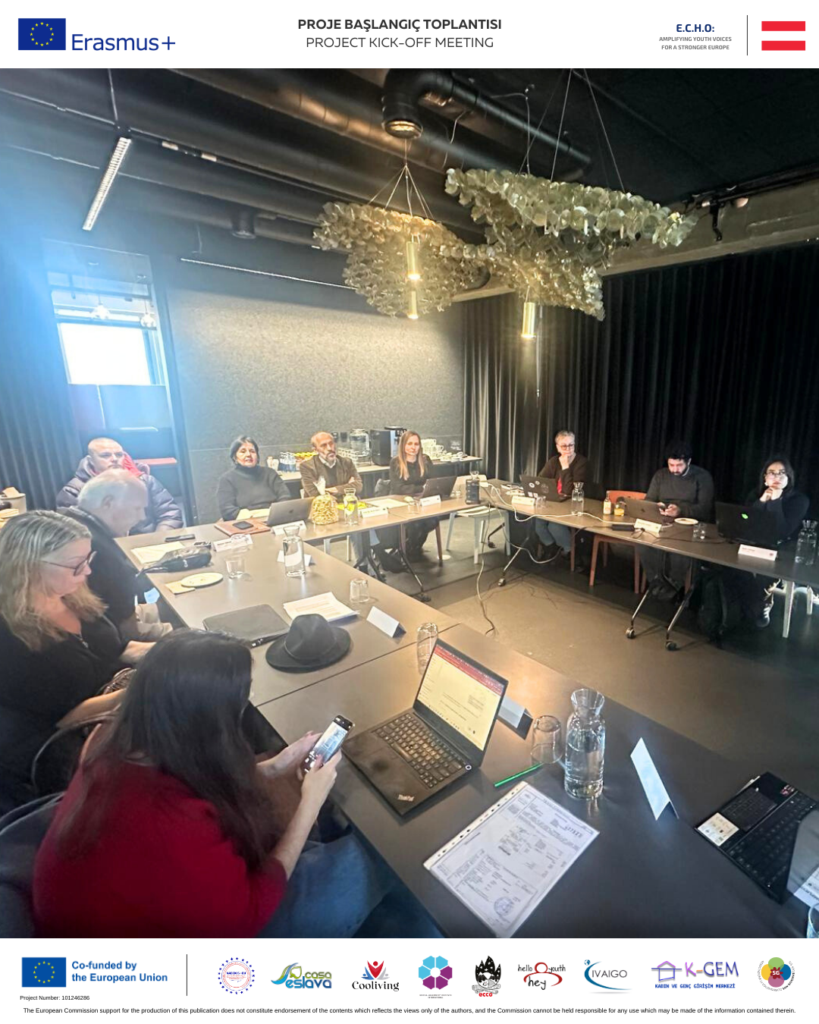
The project is structured around clear coordination and shared responsibility, with each partner contributing through defined work packages and pilot activities across Europe. Within E.C.H.O., the Digital Leadership Institute supports the project’s digital and participation-focused dimensions, contributing to online engagement, dissemination, and the creation of a sustainable digital space for youth voices. As implementation progresses, the consortium is excited to see this strong transnational collaboration grow into a lasting youth participation network, amplifying young people’s voices and strengthening their role in shaping a more inclusive and democratic Europe.

Project Timeline at a Glance

  • Dec 2025–Mar 2026 – Project launch & coordination
  • Apr–Dec 2026 – Youth exchanges & learning mobility
  • Jan–Sep 2027 – Digital hub & youth-led actions
  • Oct–Dec 2027 – Final events & long-term network
DIGI-EQUAL Launches to Support Women’s Access to Digital Employment

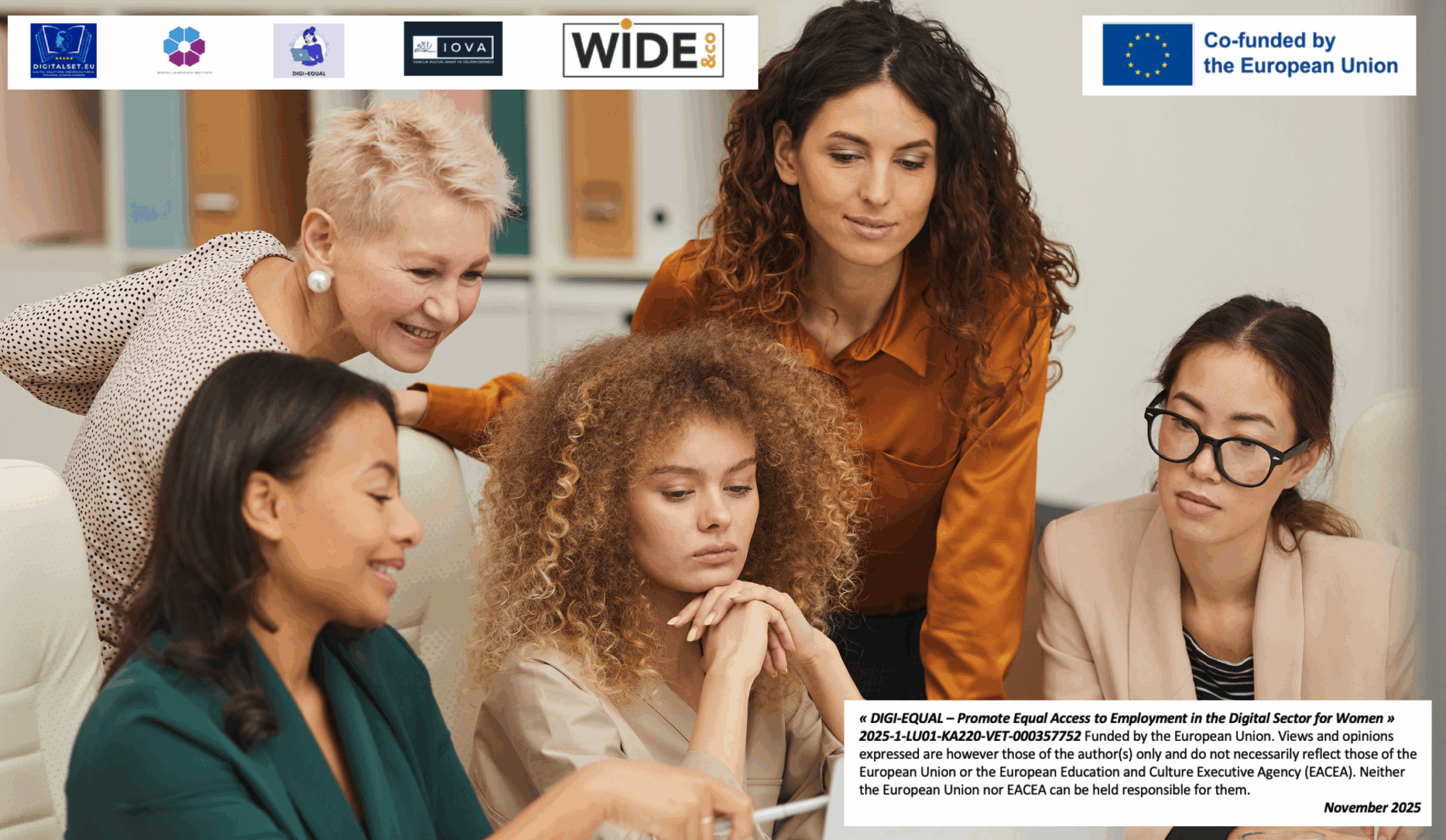
DIGI-EQUAL – Promote Equal Access to Employment in the Digital Sector for Women officially kicked off as a new Erasmus+ project bringing together partners committed to tackling gender inequality in digital careers. Coordinated by WIDE (Luxembourg), the project is implemented with IOVA (Türkiye), DIGITALSET (Ireland), and the Digital Leadership Institute (Belgium). DIGI-EQUAL focuses on women who have already completed—or are currently completing—digital training, supporting their transition into meaningful and sustainable employment in the digital sector.

At the heart of the project, DLI plays a leading role in advancing equality of opportunity and shaping solutions that respond to real barriers women face in the labour market. Current work includes identifying key digital competences, co-designing employability resources, and preparing pilot activities that will be tested with adult learners across partner countries. DLI also supports dissemination and communities of practice for adult educators, ensuring that project results reach beyond the partnership. As DIGI-EQUAL develops, the team is working towards a strong digital ecosystem that empowers women, challenges stereotypes, and demonstrates the added value of European cooperation.

Project Timeline at a Glance

  • Jan–Mar 2024 – Project launch & coordination
  • Apr–Oct 2024 – Barrier mapping & research
  • Nov 2024–Jun 2025 – Skills & competence identification
  • Jul 2025–Mar 2026 – Employability tools development
  • Apr–Dec 2026 – Pilots & testing
  • Jan–Dec 2027 – Platform, dissemination & legacy

NEW PUBLICATION: Study report on How Social Entrepreneurship Ecosystems Incorporate a Gender Lens

Social entrepreneurship has been under scrutiny for several years now. According to the Global Entrepreneurship Monitor, there is less of a gender gap in social entrepreneurship : “of the world’s social entrepreneurs, an estimated 55% are male and 45% are female – a gender gap that is less pronounced than in commercial entrepreneurship”. 

Nevertheless, many reports have highlighted the need for a better integration of women and gender minorities in the social economy, especially as social entrepreneurs. 

This initial study of the Coop4Equality project, co-developed by DLI, collected data about gender mainstreaming in the European social entrepreneurship ecosystem to better understand stakeholders’ practices regarding gender equality and inclusivity and aims to answer the following questions:

  • How do the social entrepreneurship ecosystems mainstream gender-lens?
  • Is the social entrepreneurship ecosystem adapted to women entrepreneurs? 
  • Does it take their needs into account?
  • Is there a good understanding of gender equality within this ecosystem? 

Read the full report here

Lights on Europe and Cheryl Miller Van Dÿck

by Lucia Klestincova – Originally posted on LinkedIn

Patriarchy is a real thing. The more you have to give to society, the harder it is. How to lessen the suffering? Check out this unique conversation with a founder of the Digital Leadership Institute, mother of four, policy influencer with decades of experience from Brussels to Washington, and my inspiration – Cheryl Miller Van Dÿck, MBA

📣 How to deal with the overwhelm of women empowerment not really advancing? 
🔦 Why did she choose her focus on women in democracy as a national security issue?
📡 How to get more women into cybersecurity, and once that’s done, how to inspire them to choose policy careers rather than much better paying tech business? 
🇷🇺 The transatlantic differences in using women empowerment in AI as a national security strategy and how Russia managed to get it right?
🦋 Trap of ageism & sexism in the current paradigm forgetting native leadership talents of women?

Link to Video:

Where?
😎 #LuciaKlestincova channel on #youtube
🎧 Lights on Europe on your #podcast platforms and Spotify!

DLI Director Joins OECD Cybersecurity Panel

On 6 February 2024, Cheryl Miller, DLI Director, joined an Organisation for Economic Co-operation and Development (OECD) and Microsoft panel on “Building a Skilled Cyber Security Workforce: Insights from OECD Countries,” taking place in Paris and online.

Digital Decade for Europe Skills Targets Embrace Gender Equity

Joined by experts from Poland, Ireland and France, Ms. Miller’s interventions focused on ways to increase participation of girls and women as ICT specialists in the EU, including in cybersecurity. She underscored that this is consistent with the aim of closing the gender gap in these fields articulated in the Digital Decade for Europe mission.

The OECD event also showcased results from two recent OECD reports:

  • “Building a Skilled Cyber Security Workforce in Europe” Report
  • “Building a Skilled Cyber Security Workforce in Five Countries” Report

“The first countries to recognize diversity in cybersecurity as critical to national and regional security will definitely reap the rewards,” Ms Miller concluded.