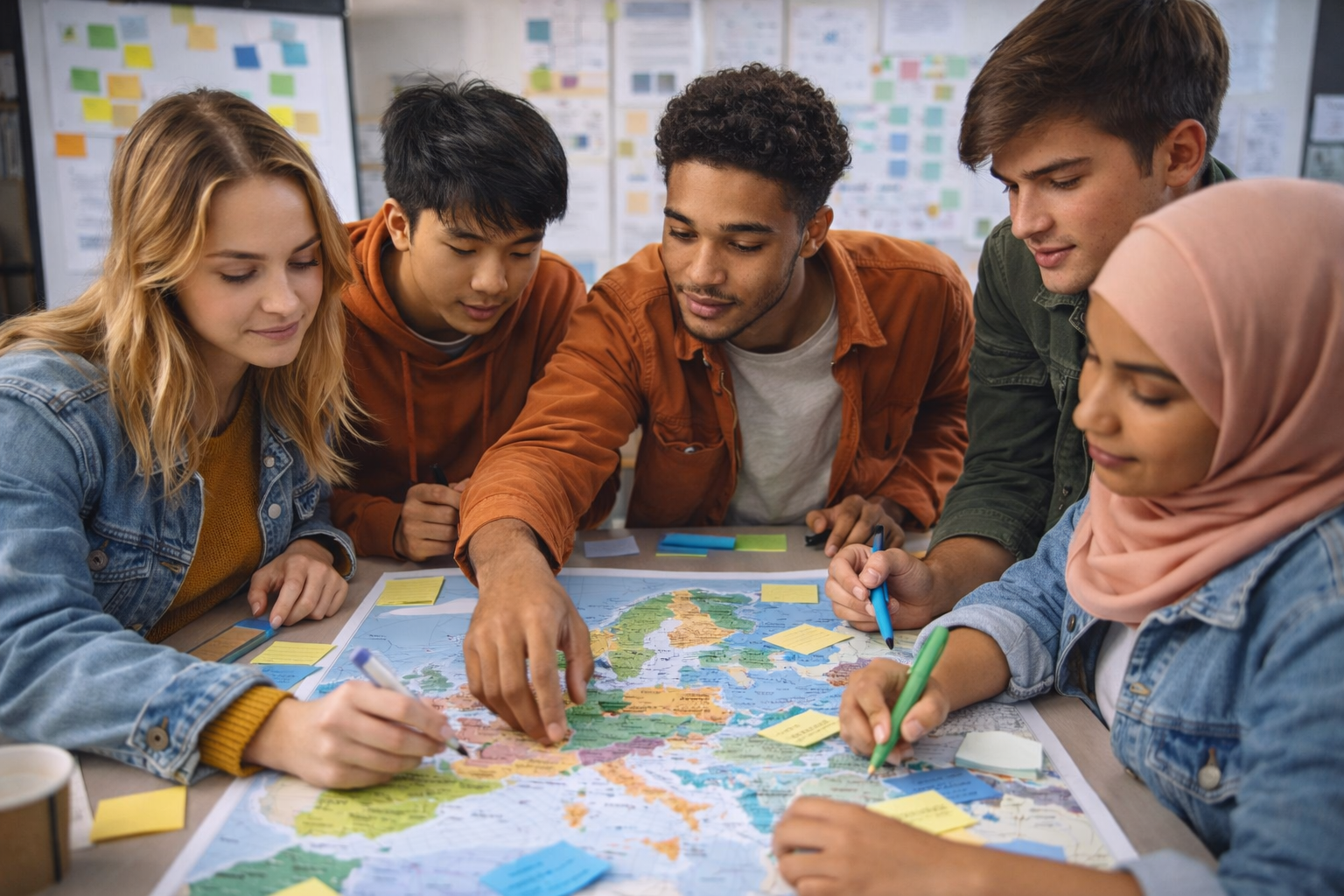
E.C.H.O. Project Launches in Vienna to Amplify Youth Voices Across Europe

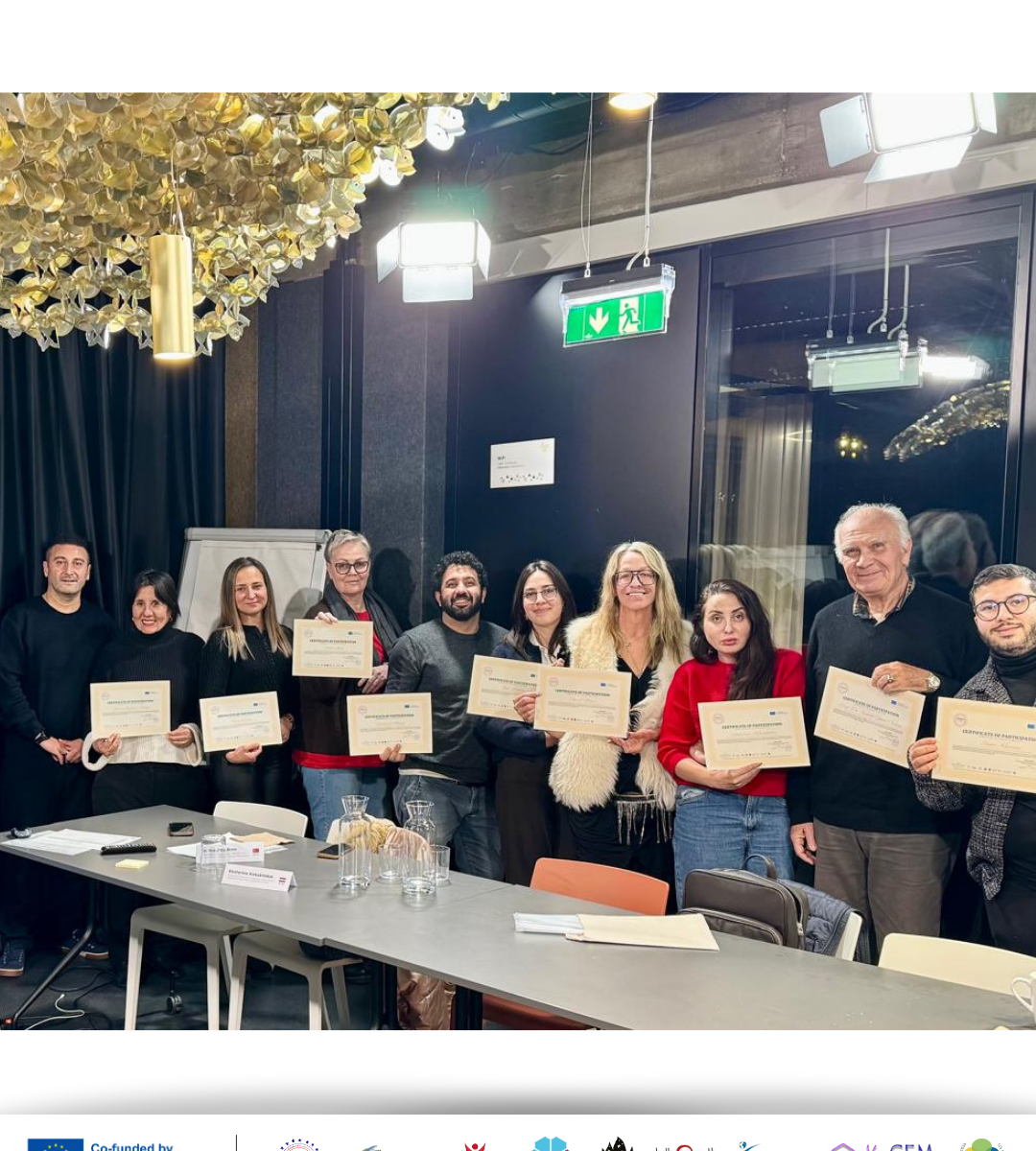
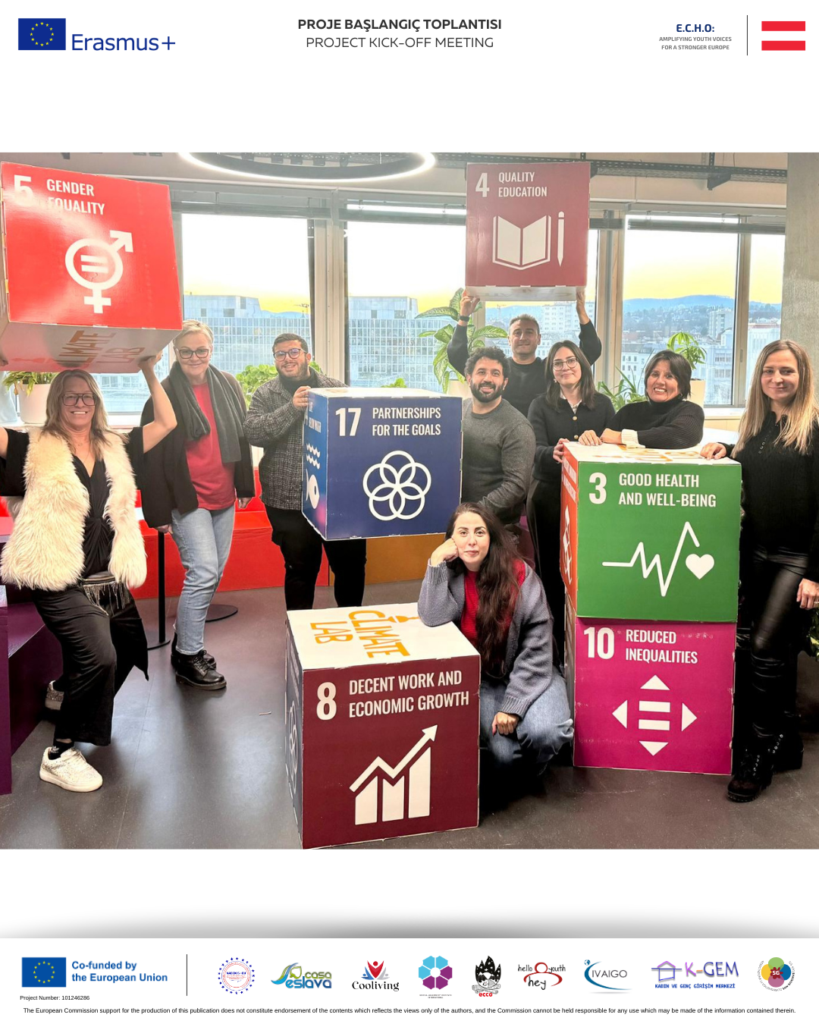
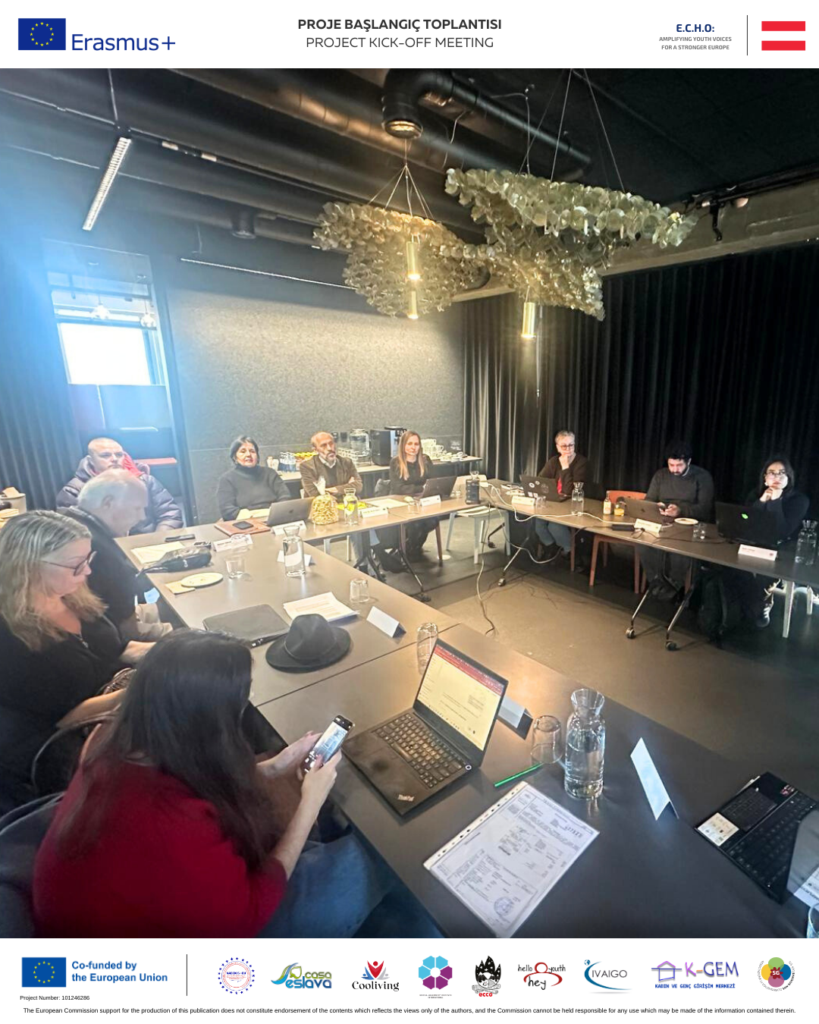
On 6 December 2025 in Vienna, Cheryl Miller, DLI Director, joined the kickoff meeting of E.C.H.O. (Amplifying Youth Voices for a Stronger Europe), an Erasmus+ youth cooperation project implemented by a consortium of nine experienced youth organisations from nine European countries. Coordinated by VABCKJS-EU (Austria) as Lead Partner, the project brings together COOLIVING (France), Casa Eslava (Spain), IVAIGO (Lithuania), Hello Youth (Sweden), ECCO (Norway), Digital Leadership Institute (Belgium), San Giuseppe Onlus (Italy), and K-GEM (Turkey). Together, the partnership combines complementary expertise in youth participation, civic engagement, inclusion, digital learning, and policy dialogue.

The project is structured around clear coordination and shared responsibility, with each partner contributing through defined work packages and pilot activities across Europe. Within E.C.H.O., the Digital Leadership Institute supports the project’s digital and participation-focused dimensions, contributing to online engagement, dissemination, and the creation of a sustainable digital space for youth voices. As implementation progresses, the consortium is excited to see this strong transnational collaboration grow into a lasting youth participation network, amplifying young people’s voices and strengthening their role in shaping a more inclusive and democratic Europe.

Project Timeline at a Glance

  • Dec 2025–Mar 2026 – Project launch & coordination
  • Apr–Dec 2026 – Youth exchanges & learning mobility
  • Jan–Sep 2027 – Digital hub & youth-led actions
  • Oct–Dec 2027 – Final events & long-term network

DIGI-EQUAL Launches to Support Women’s Access to Digital Employment

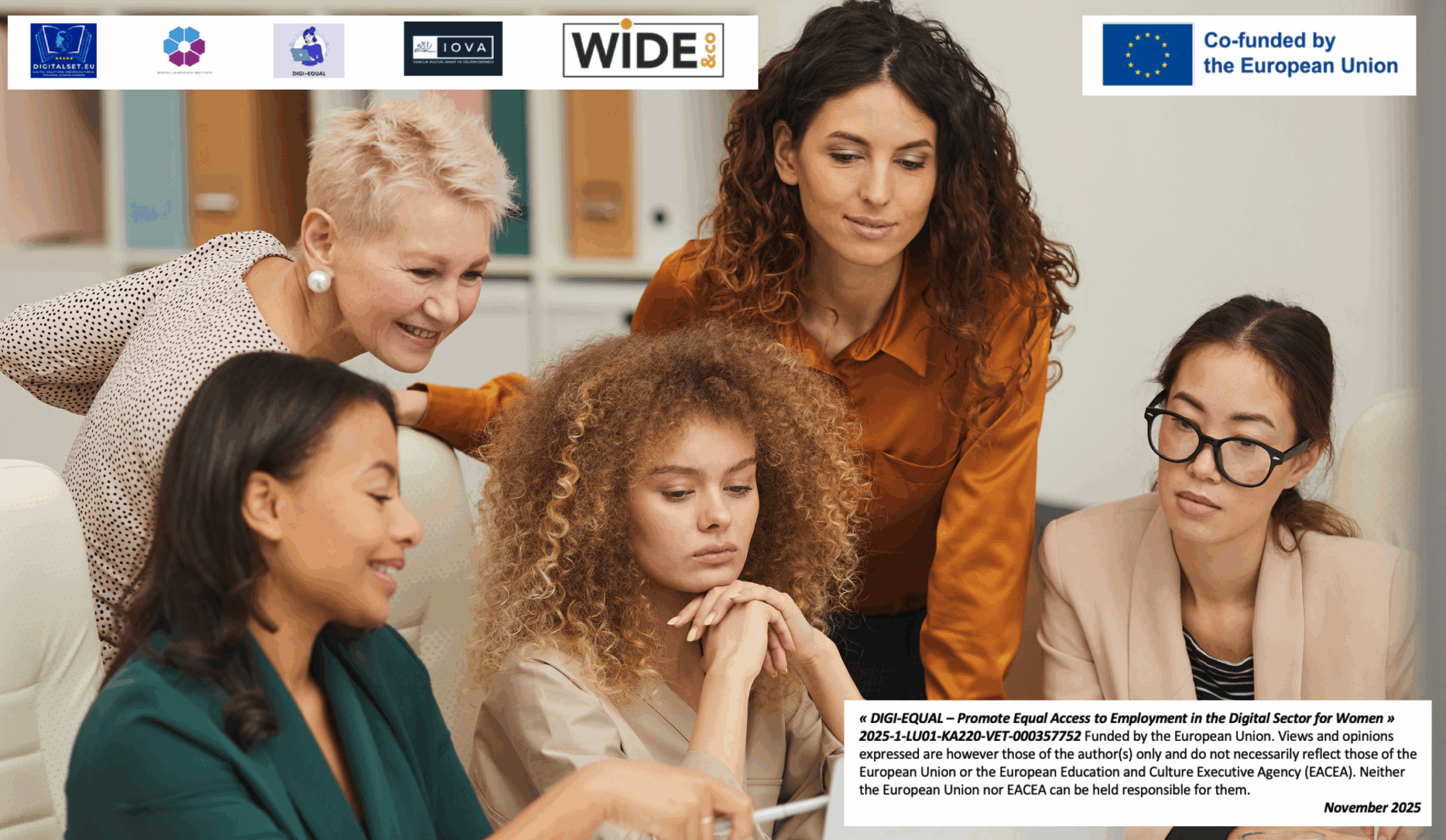
DIGI-EQUAL – Promote Equal Access to Employment in the Digital Sector for Women officially kicked off as a new Erasmus+ project bringing together partners committed to tackling gender inequality in digital careers. Coordinated by WIDE (Luxembourg), the project is implemented with IOVA (Türkiye), DIGITALSET (Ireland), and the Digital Leadership Institute (Belgium). DIGI-EQUAL focuses on women who have already completed—or are currently completing—digital training, supporting their transition into meaningful and sustainable employment in the digital sector.

At the heart of the project, DLI plays a leading role in advancing equality of opportunity and shaping solutions that respond to real barriers women face in the labour market. Current work includes identifying key digital competences, co-designing employability resources, and preparing pilot activities that will be tested with adult learners across partner countries. DLI also supports dissemination and communities of practice for adult educators, ensuring that project results reach beyond the partnership. As DIGI-EQUAL develops, the team is working towards a strong digital ecosystem that empowers women, challenges stereotypes, and demonstrates the added value of European cooperation.

Project Timeline at a Glance

  • Jan–Mar 2024 – Project launch & coordination
  • Apr–Oct 2024 – Barrier mapping & research
  • Nov 2024–Jun 2025 – Skills & competence identification
  • Jul 2025–Mar 2026 – Employability tools development
  • Apr–Dec 2026 – Pilots & testing
  • Jan–Dec 2027 – Platform, dissemination & legacy

UNESCO GENSTEMED Project Showcase Event

On 6 February 2025 in Bucharest, the International School Hermann Oberth (ISHO – Romania), in partnership with the Digital Leadership Institute (DLI – Belgium) and the Association of Women in Engineering, Science and Technology (AFIST – Romania), hosted the final event of the UNESCO Gender and STEM Education in Romania (“GENSTEMED”) project, part of the UNESCO program Revitalizing STEM Education to Equip Future Generations with STEM Competency (*science, technology, engineering and mathematics).

In-person and online participants of the event enjoyed interventions by Mr. Bogdan Cristescu, State Secretary of the Romanian Ministry of Education and Research, Ms. Ligia Deca, Secretary General of the Romanian National Commission for UNESCO, Ms. Magdalena Landry, Director of the UNESCO Regional Office for Southeast Europe, and Amb. Simona-Mirela Miculescu, President of the UNESCO General Conference. Attendees were treated to a high-level debate featuring global thought leaders, and moderated by Ms. Corina Negrea, Romanian Science Journalist. Key findings of the project’s research activities, capturing Romanian success stories in promoting gender equity in STEM fields, were also shared by project partner AFIST, while DLI and key project stakeholders led several workshops towards young people that showcased best practices in gender inclusion in STEM.

Key project and event outcomes may be found below:

  • Video Presentation of the Final GENSTEMED Showcase Event (including English subtitles) – forthcoming.
  • GENSTEMED Research Outcomes Presentation – featuring Romanian success stories in promoting gender equity in STEM fields.
  • GENSTEMED Emerging Technology Workshop Train-the-Trainer Toolkit – embodying best practices for promoting digital equity through digital skills trainings toward young people
  • Interim Report of the GENSTEMED Project – including Research Activities carried out through the midway point of the project.
  • Final Report of the GENSTEMED Project – including Recommendations and a Way Forward based on project findings and outcomes.

If you would like to learn more about the GENSTEMED project, please contact us.

NEW PUBLICATION: Study report on How Social Entrepreneurship Ecosystems Incorporate a Gender Lens

Social entrepreneurship has been under scrutiny for several years now. According to the Global Entrepreneurship Monitor, there is less of a gender gap in social entrepreneurship : “of the world’s social entrepreneurs, an estimated 55% are male and 45% are female – a gender gap that is less pronounced than in commercial entrepreneurship”. 

Nevertheless, many reports have highlighted the need for a better integration of women and gender minorities in the social economy, especially as social entrepreneurs. 

This initial study of the Coop4Equality project, co-developed by DLI, collected data about gender mainstreaming in the European social entrepreneurship ecosystem to better understand stakeholders’ practices regarding gender equality and inclusivity and aims to answer the following questions:

  • How do the social entrepreneurship ecosystems mainstream gender-lens?
  • Is the social entrepreneurship ecosystem adapted to women entrepreneurs? 
  • Does it take their needs into account?
  • Is there a good understanding of gender equality within this ecosystem? 

Read the full report here

DLI Lands UNESCO STEM and Gender Project

2 women using VR headsets to build a machine

On 5 July, UNESCO announced the first five recipients of its program on Revitalizing STEM Education to Equip Next Generations with STEM* Competency (*Science, Technology, Engineering and Mathematics). Among awardees, the Brussels-based Digital Leadership Institute, a pioneer in promoting digital equity for girls and women, was tapped to lead a joint Romanian and Belgian project on “Gender and STEM Education in Romania” (GenSTEMed) with the International School Hermann Oberth and Association for Women in Engineering, Science and Technology.

The Revitalizing STEM Education Program is part of a Series of STEM Education Actions led by UNESCO

The Revitalizing STEM program builds on groundbreaking work in this field led by UNESCO’s Regional Bureau for Science and Culture in Europe, including support for a regional STEM Alliance, a diverse group of stakeholders in STEM and Education from across Southeast Europe and the Mediterranean. For the past three years, Cheryl Miller, DLI Director, has contributed to the STEM Alliance and authored a report for UNESCO on Digital and Gender Policies in Southeast Europe which also helped inform the present action (see YouTube video here).

Cheryl Miller, DLI Director, authored “Gender and Digital Policies” Report for the UNESCO Regional Bureau for Science and Culture in Europe

The GenSTEMed project aims to increase knowledge of factors influencing the decisions girls and women make about STEM studies and careers, an area in which Romania enjoys global leadership. The project’s Research Activities begin with stakeholder surveys and interviews starting in September 2024, outcomes of which will be shared at a hybrid event in Bucharest in February 2025. The event will also host practitioner discussions, inspiring role model talks, and Educational Activities, latter including hands-on emerging technology workshops targeting students and practitioners and aiming to showcase practices that increase participation of girls and women in STEM.

STEM Alliance
STEM Alliance Conference, April 2023

To learn more about the Gender and STEM Education in Romania project, please follow the UNESCO program website or contact us.